French drains
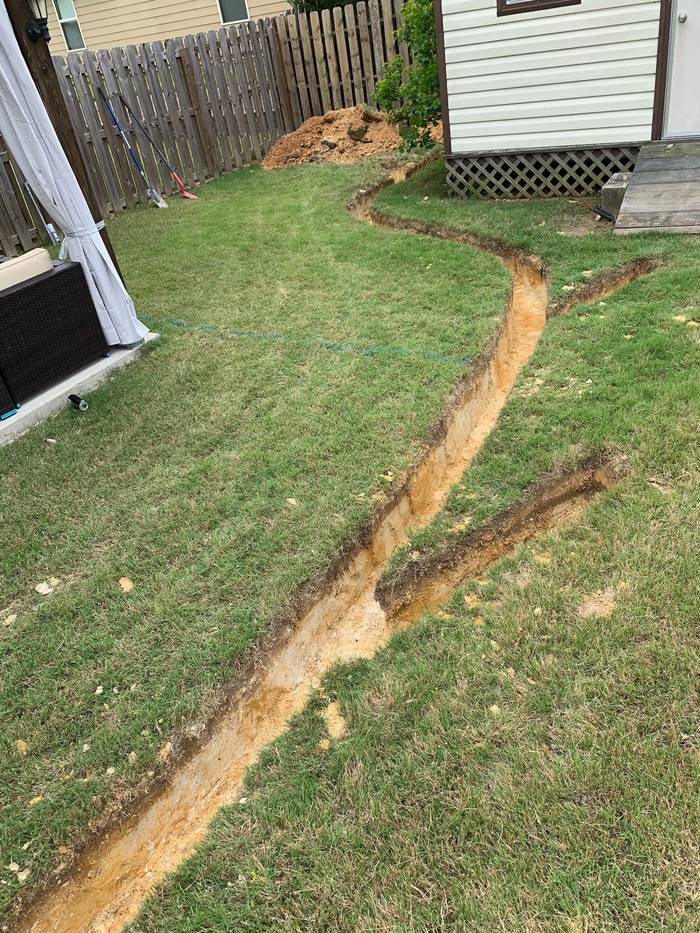
A gravel-filled trench with perforated pipe that collects groundwater and carries it away. The go-to fix for soggy lawns and wet foundations.

Drainage solutions
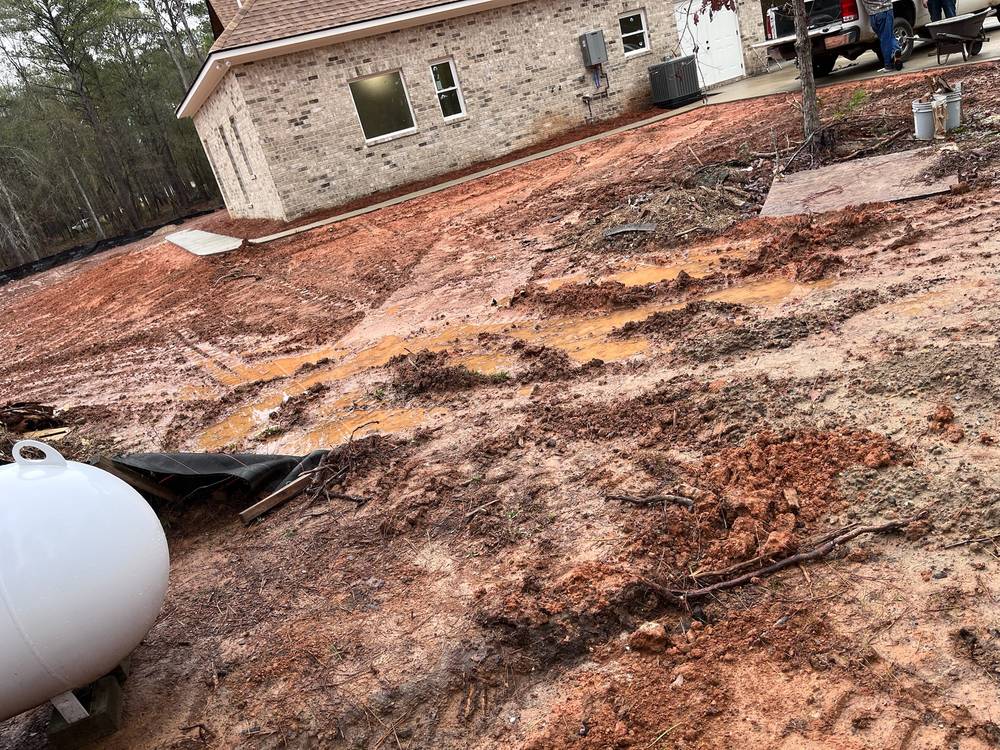
Standing water, soggy spots, washed-out beds and water against the foundation. We find where the water is coming from, where it needs to go, and build a system that moves it there for good.
If any of these sound familiar, water is sitting where it shouldn't.
Every yard is different. Most fixes use one or more of these.
A gravel-filled trench with perforated pipe that collects groundwater and carries it away. The go-to fix for soggy lawns and wet foundations.
We bury your downspouts into solid pipe and carry roof water away from the house to a pop-up emitter, a creek bed or the street.
Grates that catch surface water in low spots, along driveways and at the edge of patios before it can pool.
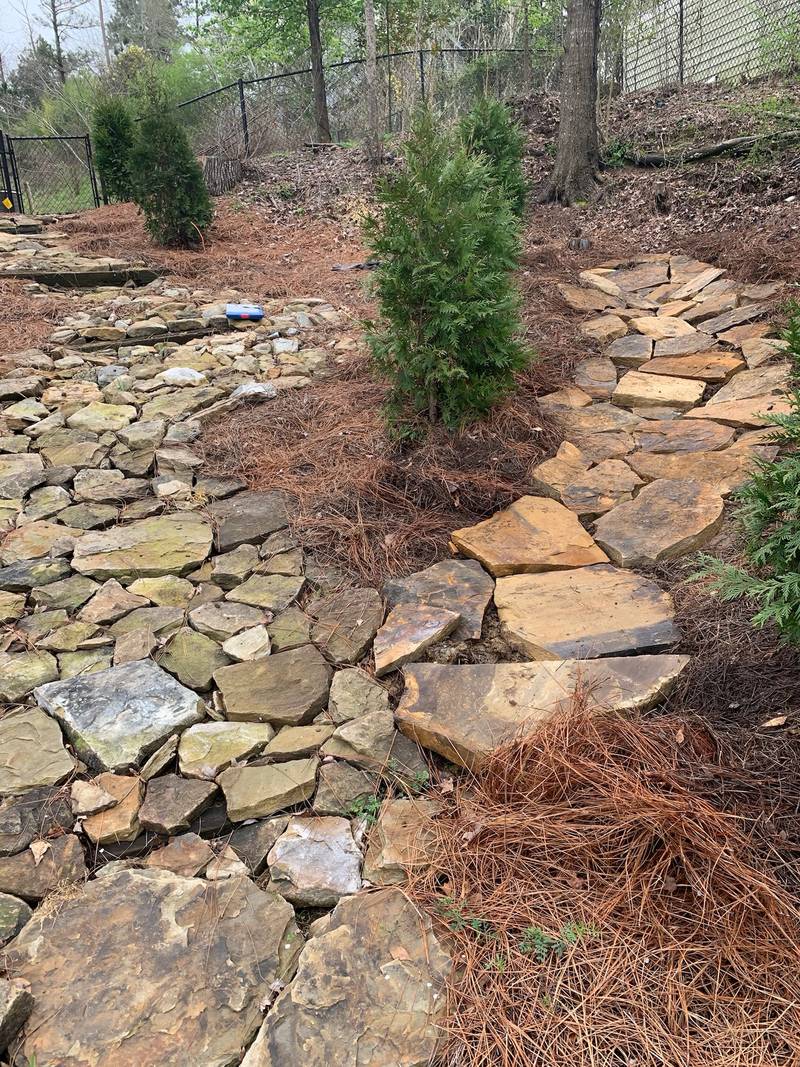
A rock-lined channel that moves water across the yard and looks like a natural feature when it's dry.
Reshaping the ground so water flows away from the house instead of toward it. Often the root cause of the whole problem.
Stabilizing slopes and banks with rock, matting and plantings so they stop washing out every storm.
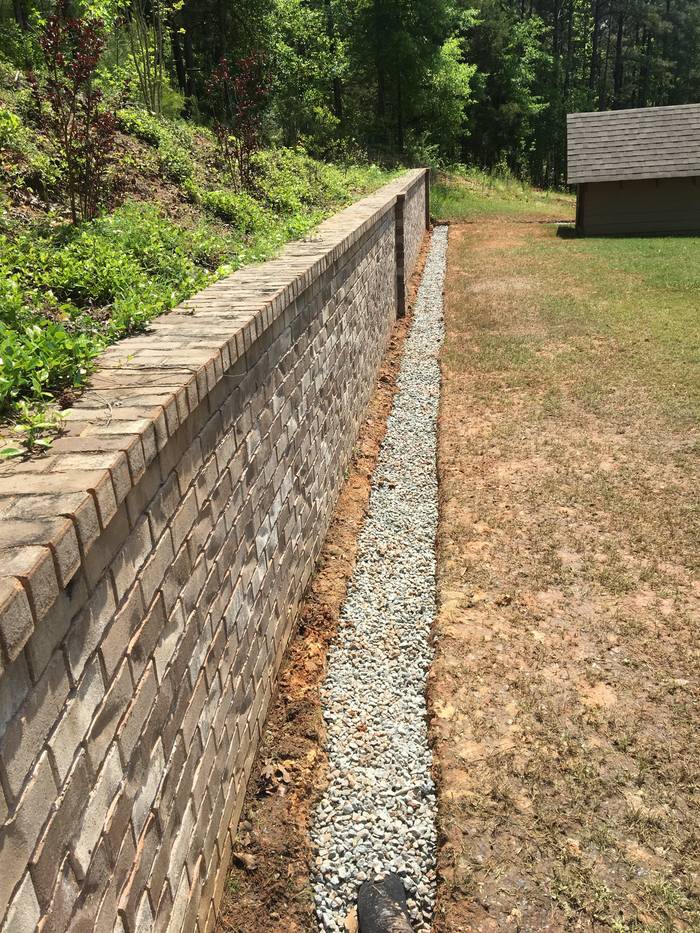
Retaining walls with drain stone and pipe behind them, so water never builds up and pushes the wall over.
Drainage installed to plan for GCs, including large-diameter pipe runs. In-house drawings, engineer-certified as needed.
How a French drain works
Water in the soil takes the easiest path. A French drain gives it one: loose stone around a perforated pipe, wrapped in fabric so dirt can't clog it, with the pipe sloped downhill to an outlet. Done right, you never think about that wet spot again.
Done wrong, with no fabric, no slope or nowhere for the water to go, it clogs up in a couple of years. We see a lot of those. We fix a lot of those.
From soupy new-construction yards to finished creek beds.
We look at the slope, the soil, the gutters and where water is coming from. After a rain is the best time to see it.
You get a clear plan and a written, line-by-line price. Drawings in-house, engineer-certified if the job needs it.
Trenching, pipe, stone and outlets, all tied together and sloped the right way.
Sod, straw and beds restored, so the only sign we were there is the water being gone.
Text us a photo of the problem area at (706) 570-3795.
It depends on where the water comes from. Sometimes it's groundwater, sometimes it's roof water or a neighbor's slope. We figure out the source first so you pay for the fix that actually works.
There's digging involved, but we keep it to the trench lines and restore the grass, straw and beds when we're done.
To the lowest safe point: a pop-up emitter, a creek bed, a storm drain or the street, depending on your property and local rules.
It depends on the length of the run, the depth and what's in the way. The assessment is free, and you get a written price before any work starts.
Send us a photo or book a free assessment, and we'll tell you exactly what's going on.